1 WHERE AND HOW PEOPLE GET TOXIC
1.1 Why mercury is so dangerous
Mercury is one of the most poisonous substances known to man. Extremely small exposures are enough to ruin your health for your entire life. Yet, since it is tremendously useful technologically, it can be found in all kinds of products and devices. It is beautiful and fun to play with and has even been made into toys. Andy remembers having a little ball of mercury to play with when he was six or seven. He has no idea what became of it.
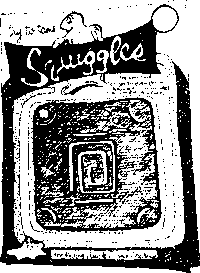
Figure 1.1. A mercury puzzle
This is a maze with mercury under a transparent cover. Now it would contain a steel ball.
Mercury evaporates readily. It is easy to get exposed and become severely toxic without the source of the exposure being discovered. While it is easy to get poisoned by mercury, it does not come out of your body easily. It builds up over time. An exposure you experienced fifty years ago can still be causing you trouble today.
Some people are clearly more susceptible to getting toxic that others. This susceptibility runs in families. It explains why one person will become sick from mercury while another (with the same exposure) will be healthy. Factors other than genetics also affect susceptibility. A primary factor is liver disease. Those who have or have had hepatitis will accumulate mercury up to four times faster than their unaffected twin.
You may not get sick gradually. It is common for peoples bodies to be able to handle mercury until a certain amount is accumulated. This amount will be different for each person. Finally, you accumulate enough mercury to change your biochemistry which causes your body to stop working properly.
1.2 How you might have become poisoned
Although dentistry and medicine are the most common sources of exposure, it is possible to have never had a mercury filling or a mercury-preserved vaccine in your life and still be toxic. Plenty of people have been poisoned without ever figuring out how it happened.
Some possible exposures would be easy to miss. Do you know if a former tenant spilled a lot of mercury in the apartment where you live? What about your second-hand car? Perhaps the previous owner filled up the trunk with old mercury thermometers and tilt switches to take to the dump and a lot of them broke. Or perhaps someone spilled a quart of mercury in a lab where you studied or worked and it has been evaporating from the cracks in the floorboards for the past thirty years.
Below are some documented ways people have been exposed:
• amalgam or “silver” dental fillings —These are the biggest source of mercury exposure in the general population. Amalgam fillings are 50% mercury by weight. Mercury evaporates from these fillings and the vapor goes on to accumulate in the brain and organs.
Just as some people’s bodies are more sensitive to mercury, some peoples fillings give off more mercury vapor than others. Most peoples fillings emit modest amounts of mercury and those people only get poisoned if they are very sensitive. Other peoples fillings emit very high levels of mercury. They will get poisoned no matter what.
• vaccines and injections —In the past the pediatric vaccine schedule exposed children to much more mercury than is recommended as safe by the EPA. The mercury preservative thimerosal was supposedly removed from pediatric vaccines in 2003, but actually a deadline to stop manufacturing was only established for several years later. Even after this deadline, old stock on the shelf was sold up to its expiration date.
Although mercury was supposedly removed from the pediatric schedule, both children and adults still get plenty of exposure from vaccines. The multiple dose vials for the flu vaccine, that is irresponsibly given to children and pregnant women, contains mercury. Vaccines that are shipped abroad to the Third World still contain it. Until recently, most allergy shots contained mercury.
Finally, adult vaccines (for children eight and older) still contain mercury and are much cheaper than pediatric vaccines. Since doctors are told that mercury containing vaccines are perfectly safe, many pediatricians use them on children to save money.
• fish —Fish concentrate mercury from the environment. People who eat a diet rich in large fish at the top of the food chain, such as tuna or swordfish, can become toxic. This can be as simple as eating a lot of canned tuna. Freshwater fish from small, highly contaminated waterways may be particularly dangerous. These fish, which are generally caught for sport, sometimes have vastly elevated mercury levels and there is currently no organized monitoring program to keep the public from eating them. (Fish, unlike mammals and birds, protect themselves with enzymes that methylate the mercury. That is why fish that are full of mercury are not sick themselves.)
• mercury in the environment from mining —Mercury was used in the mining of gold and silver at the time of the Gold Rush in the United States. It is still used in some Third World countries today. Liquid mercury was mixed with some crushed ore, shaken out and put in a pot on the campfire to boil away and leave a bit of gold or silver behind. Cinnabar, or mercury ore, was also refined by heating on a fire. The mercury would evaporate and a portion would be condensed. Old mining sites are still heavily contaminated and are, unfortunately, fascinating to children.
mercury in agriculture —Red mercuric oxide and later organic mercury compounds were used as fungicides to preserve seed grains. This caused several instances of mass poisonings, with many fatalities. The largest and most notorious instance happened in Iraq in 1971-1972 from seed grain donated by the United States. The farmers who received the grain didn’t understand the warning labels and used the grain for baking bread.
Manometers, which are used to measure pressure in the milking machines on dairy farms, are another example of mercury used in agriculture. They used to contain a full pound of mercury, which was exposed to the air. They were thought to have been mostly phased out by digital models but there were no records kept of what happened to the old ones, or indeed if any mercury manometers are still in use.
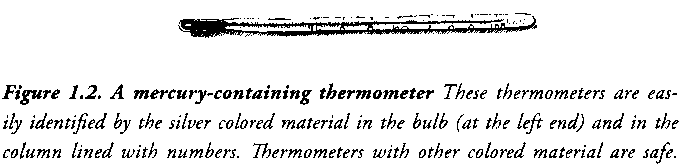
• broken mercury-containing devices —Mercury is often used in devices to float components so they stay level and isolated from vibration. Many light switches contain mercury. If you have a light switch which doesn’t click when you flip it, there is mercury inside. Many batteries contain mercury, one example being the batteries in little children’s light-up shoes. Smart phones and tablets may contain it. Thermometers, compact fluorescent light bulbs or fluorescent tubes, tilt switches from automobiles, thermostats, manometers, and barometers all contain mercury. It can be found in all kinds of engine repair shops, in gauges for ships’ ballasts, or in any application where pressure differences due to airflow must be measured. It is frequently forced past gauge seals and splashed all over the place when someone turns the wrong dial.
• medical products —Mercury was used historically as medication, and can still be found in some eye drops, nose drops, ear drops and other products. Examples are mercurochrome, merthiolate, Neo-Synephrine nose drops, and contact lens cleaning and soaking solutions made before 1990s. (Some companies are selling mercury-free versions of mercurochrome and merthiolate. They contain other antiseptics.) Yellow mercuric oxide ointment was used for eyelid problems until 2013. Red mercuric oxide was used for psoriasis. Calomel—mercurous chloride —as a laxative. Mercury is still used in some Traditional Chinese, Ayurvedic and homeopathic preparations.
• spills —Liquid mercury, once dispersed, is hard to find. It seeps between floorboards and accumulates under carpet, continuing to evaporate for years. Dental practices were often responsible for spilling gallons of mercury, which ended up in the building, floor and soil around the building. It is still there decades later. Before there were any safety concerns, factories that made mercury-containing devices could be closed without doing any environmental cleanup. Large quantities of free liquid mercury might remain in what later could be converted in to an apartment building, nursing home or childrens daycare.
Old chemistry labs where spills happened even decades ago can still be a source of exposure. This also applies to buildings where a child played with mercury or the previous tenant broke a thermometer and didn’t clean it up properly. The same goes for buildings where people repackaged mercury, recovered silver from dental amalgams, did amateur science experiments or homes where the previous tenant used mercury in religious rites.
• certain antiques —The CDC warns the public about the following antique items that might contain mercury: thermometers, barometers, pendulum clocks, electrical switches, blood pressure gauges, thermostats, silvered mirrors and silvered vases. Objects made from carved cinnabar, or mercury ore, can still be found for sale in antique stores or in private collections.
• cosmetics —Mercury is used as a preservative in cosmetics (for example, mascara at 65ppm), and as an active ingredient in certain skin lightening creams. Mercury interferes with the skin’s ability to produce melanin which is why it is used in these skin creams. Skin lightening creams are a business worth several billion dollars a year. These mercury-containing creams are still sold in various jurisdictions where they are legally banned.
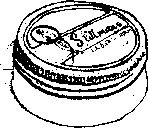
Figure 1.3. A jar of skin lightening cream containing mercury
This is ajar of mercury-containing skin-lightening cream that was poisoning a person Andy was helping. It was bought in 2012 in a major first world city and is believed to be widely available in countries where mercury is banned as well as where it is legal.
• paint —Phenylmercuric acetate was used as a preservative in paint until 1991. It could be found in interior latex paint in amounts up to or equal to 300 ppm and exterior latex paint up to or equal to 2,000 ppm. The manufacturers were not required to list this on the label.
It is estimated that 227 metric tons per year of mercury compounds was used in paints from the mid 1960s until 1991. One ounce bottles of phenylmercuric acetate were sold to the public to mix in paint. Andy remembers seeing one of these bottles in his mother’s garage in 2000. He has no idea what became of it.
Mercury was used as a preservative in the flooring of some school gyms. Some state agencies issue health warning and exposure guidelines.
It can be hard to recognize mercury in ingredient lists. To assist you, Table 1.1 includes some other names for mercury.
Table 1.1
Other names for mercury
amide chloride of mercury
mercuric chloride
ammoniated mercury
mercuric iodide
blue mass
mercurochrome
blue pill
Mercurophen
Calomel (mercurous chloride)
mercurous chloride
Calomelol
mercury iodide
Cerosan
Mersalyl
cinnabar (mercury sulfide)
merthiolate
ethylmercuric chloride
phenylmercuric acetate
ethylmercury thiosalicylate
phenylmercuric nitrate
Granosan
quicksilver
Hg
red mercuric oxide
hydrargyri oxydum rubrum (red mercuric oxide)
sindoor
merbromin
thimerosal
mercadium Lithopone red
thiomersal
mercadium Red (cadmium mercury red)
vermillion
mercumatilin sodium
yellow mercuric oxide
mercufenol chloride
“Poison”
Directions to avoid contact with silver, gold, rubber, aluminum and jewelry may also indicate the presence of mercury.
1.3 Why your doctor might miss what is wrong
Doctors have to remember and be able to identify thousands of different diseases, but they are not trained to recognize chronic mercury poisoning. Andy had personal experience with this. His doctor remembered what he was taught about mercury symptoms in school but missed Andy’s diagnosis.
Andy’s health began to decline in 1992 after the placement of two amalgam fillings that extended below the gum-line. He went to his doctor many times, first for allergies, then for other complaints. The doctor, who was a smart man with an undergraduate degree in Biochemistry, became concerned when he saw blood in a urine test. He asked Andy if he worked with mercury. When Andy said no, the doctor dropped the subject and went on to investigate other possible causes. Eventually blood cells stopped showing up in Andy’s urine so both he and the doctor forgot about it.
If the doctor had thought to ask about recent dental work and tested Andy for mercury, it could have saved years of grief! Andy would have continued on as an engineering consultant and never have had to figure out how to detoxify. He never would have written about mercury poisoning. But the doctor, though smart and well-educated, didn’t realize that what he had learned in medical school about mercury was insufficient. He didn’t realize he should have checked for mercury even though Andy didn’t work with it.
Rebecca was exposed to mercury through the many travel vaccines she got as the child of a Foreign Service officer, plus an enormous amount of dental work because of weak teeth. She also got a big exposure in 1986, when she returned home from abroad. A dentist drilled out eight amalgam fillings and replaced them with brand new amalgam. Although in retrospect, she thinks she had many mercurial symptoms since childhood, this episode sent her into a period of weeping day and night and after that a life plagued with anxiety, depression and fatigue. Her case was confusing because she, had Hepatitis C. Hepatitis causes a person to accumulate mercury more quickly, and it also causes fatigue.
In 2015, Rebecca took the new Hepatitis C cure, which eliminated the virus. Afterwards, she was so fatigued, she could barely get out of bed even though her virus titers were at zero and her liver enzymes within range for the first time in decades. The doctor, in Rebeccas case, was also a very smart person. Her reply to, “How come I still feel so horrible?” was, “I don’t know why you feel so horrible, but I am delighted!” It took months of chelation and adrenal support for Rebecca to start feeling well again. Now, with no virus, and no mercury either, she has recovered her health.